A Ghost Story
By Caroline Thompson
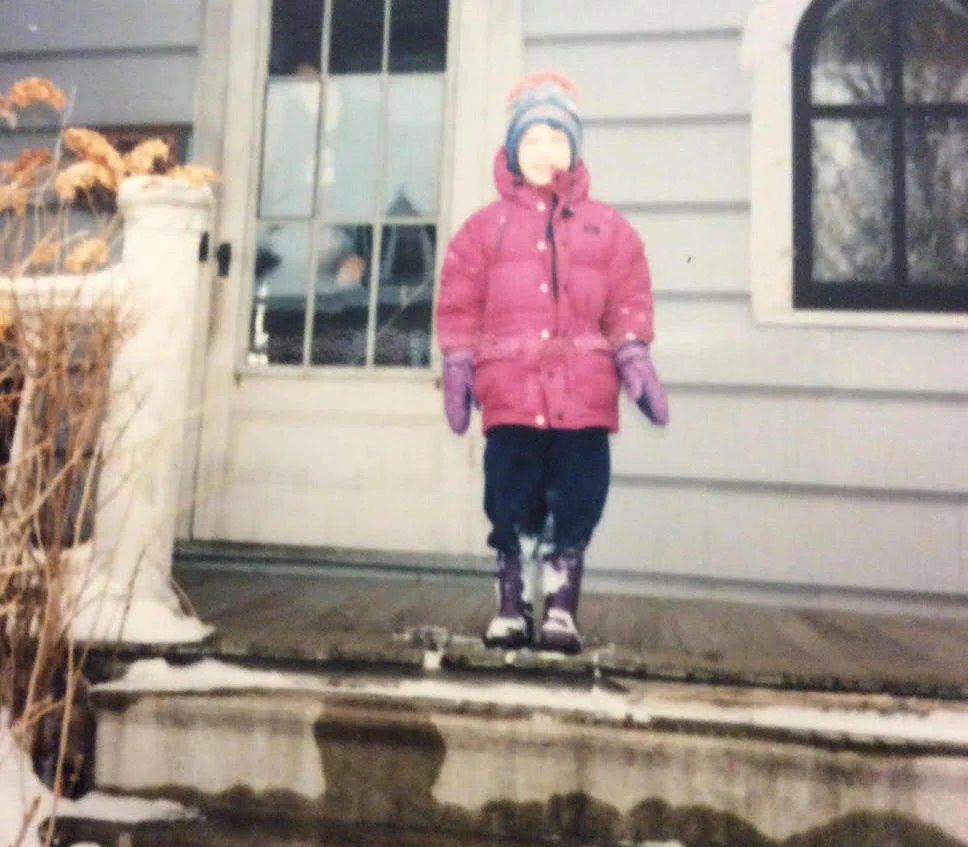
In March of 1995, I moved with my parents from a small grey stucco bungalow in St. Paul into the collapsing remains of what was once my great-grandmother’s house. It was an old Victorian, built in 1902 in the in the heart of the city, neglected for nearly half a century by Frank, my hermit great uncle, who never cleaned or threw anything out. The rusted metal siding was falling off. The huge double lot was overrun with trees and weeds, along with all sorts of strange devices that Frank built and discarded to rot among the brush.
Inside the house, the peeling wallpaper and chipping lead paint were hardly visible behind the piles of junk that lined the walls of each room. Mine was dubbed the “Reader’s Digest” room, as it contained every copy of the magazine from 1950 onward, all still wrapped in their protective plastic: never touched, never read, never digested. It took five dumpsters to clear the place out, and even today the basement and attic are crammed full of trinkets and memorabilia that somehow seemed too precious to throw away.
I didn’t move in right away. For the first few days of chaos, I stayed with my best friend Elle, her older brother, Costa, and their mother, Wendy. Elle and I were as close as sisters, often telling anyone who’d listen that we were identical twins, separated at birth. We had matching nightgowns and matching bowl cuts, so if you squinted hard enough, you might mistake us for cousins. Her mother would go along with our games, pretending to mistake me for Elle or Elle for me.
Wendy was my mother’s best friend and something of a mystical figure in my life. I found her the epitome of beauty and glamour; she wore heels and lipstick, mascara and intricately beaded dresses. Elle and I used to open her closet when she wasn’t home, run our hands through the rainbow of elegant gowns crammed inside, and try on her pointed shoes, fur shawls, and fancy hats. How wonderful it must be to be grown up and beautiful, we’d think, covering our faces with poorly applied blush and eyeshadow, then hastily scrubbing them clean at the first sound of footsteps on the stairs.
Wendy had the kind of platinum blonde, shoulder-length hair I’d seen only in movies. The first time I saw a picture of Marilyn Monroe, I wondered aloud if she might have been Elle’s grandmother. At night during our extended sleepover, Wendy would smooth our matching nightgowns, tuck us into bed and lull us to sleep with made up stories of two brave princesses—twins, of course—who looked and acted an awful lot like we did. These tales flowed effortlessly from her lips, creating fantasies so elaborate and well constructed that I started to believe them.
I always saw Wendy as a clairvoyant, somehow in touch with the mysteries of the universe in a way I envy to this day. The night I moved into my new house for good, my parents had Wendy and Elle over for dinner in our junk-filled dining room.
Halfway through dinner, Wendy looked up sharply. “I don’t want to freak anyone out,” she said, twirling her fork. “But I’m feeling a really strong presence from that corner.”
She pointed to the southeast corner of the dining room, empty but for some half-unpacked boxes and a thick layer of dust. “It’s not aggressive or anything,” she clarified. “It’s just there. It seems like it’s looking out the window.”
My dad turned white. When he was a kid, his grandmother brought him to the house to visit her mother, Inga. Above all else, he remembers the darkness: the house was always dark; the curtains closed tightly even during the brightest afternoons, the light fixtures either empty or equipped with flickering 20-watt bulbs.
Inga wore long black dresses and the kind of old-fashioned, black leather lace-up shoes that were popular at the turn of the 20th century. She spent most of her day in a rocking chair in the southeast corner of the dining room, staring out into the backyard through a small slit in the curtains.
Wendy didn’t know this, how could she? He laughed it off when he explained his reaction to the table, but I could tell he wasn’t sure what to believe.
***
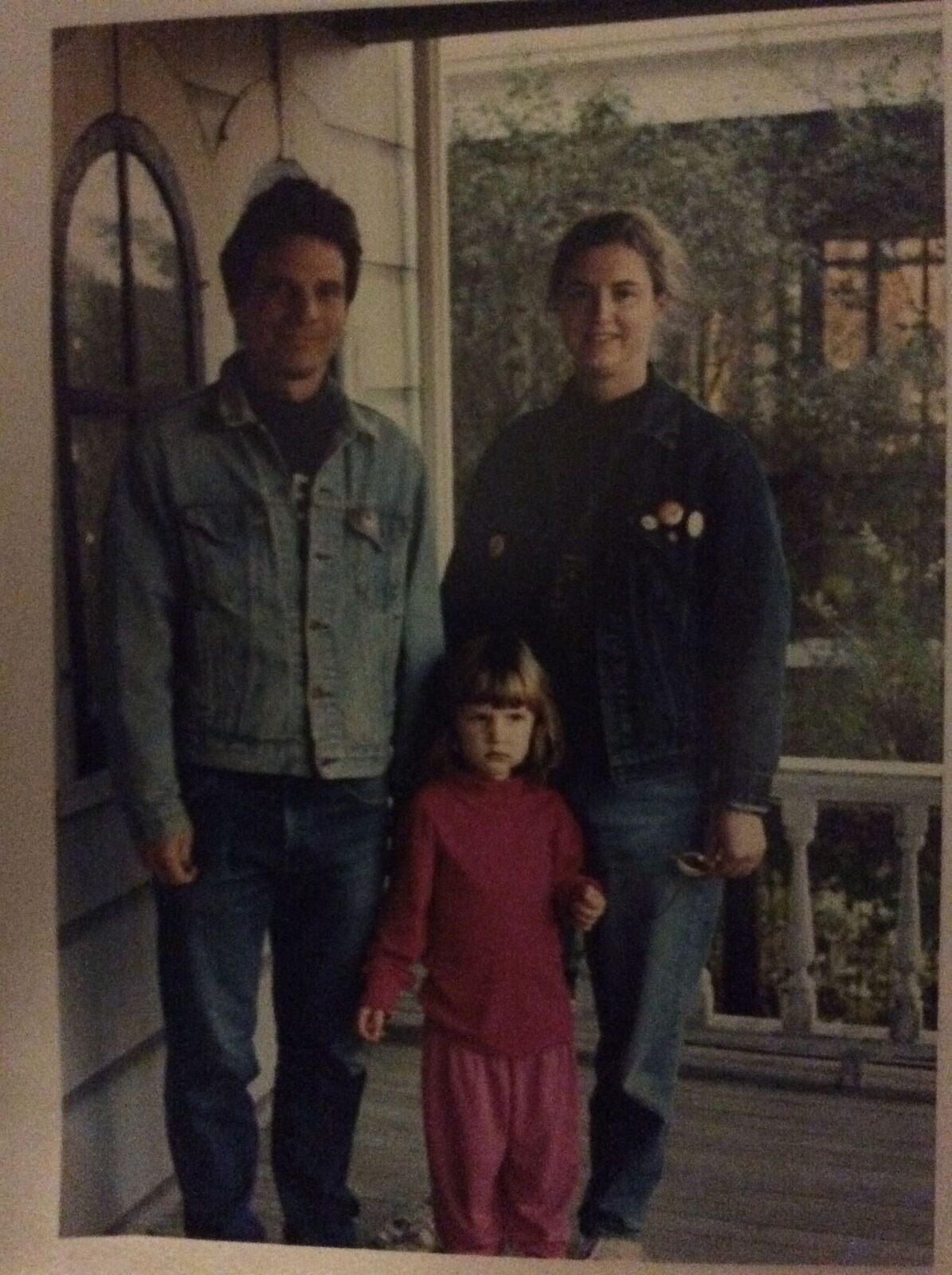
Inga’s husband, my great-great grandfather Joseph Renz, bought the house in 1905. Over the next 109 years, several elderly members of my family passed away inside its walls. I knew none of this when I moved in, of course. My parents knew better than to tell a six-year-old with an active imagination of the bodies that once lay cold under our roof.
It didn't matter what I knew. Nothing stopped the phantoms of my ancestors from making nightly visits to my room. For years, the sad woman in my closet was as real to me as anyone else, and my memories of the hours I spent at night trying to coax her into the light are vivid: a soft, melodious voice drifting from the behind the row of Hanna Andersson jumpers hanging in my closet, begging to be heard and understood.
It was a woman, I was sure, but her voice was never louder than a whisper, her words never quite possible to understand. Night after night, bundled up under piles of blankets and cowering in the same room -- the same bed -- that my great-grandmother slept in as a child, I strained my ears to decipher these murmurs. When I built up the courage, I would poke my head out into the cold night air, hoping to catch a word or phrase that held meaning for me. I’d peek around the room with my eyes squinting so I could shut them at a moment’s notice. But there was never anything to see. The voice fell silent the moment my head left my comforter. This, deathly silence was more terrifying than the voice itself, and I would shoot back under the covers, doomed to spend the rest of the night in an agitated half-sleep that left me sick and sluggish in the morning.
As I began to adapt to life in the ever-changing construction site that was my new home, I felt the need to avoid certain places at all costs. The attic: sprawling, unfinished, half rotting, full of cobwebs and accessible only through a steep, unlit staircase with a trap door. The attic gave me nightmares for years after I first encountered it.
Nearly every night, I heard the creaking sound of footsteps above my bed, a restless spirit wandering aimlessly around the piles of clutter dotting the third floor.
Sometimes I could feel cold hands creep up my legs beneath my covers, and I’d often be shaken awake by a dark figure who’d evaporate upwards, towards the attic, the moment my sleep-blurred vision cleared.
My parents were less than thrilled to be shaken awake every night by my hysterical calls for help. Old houses are creaky by nature, they'd say. Any sounds I’d heard from the attic were probably just wind or rotting wood or even little mice. I tried to believe them. But I knew There is a very distinct sound that the human body makes as it moves across a room on its feet.This was the sound I heard at night, and to this day I dream of the attic.
In my dreams it houses a labyrinth, and I’m compelled to wander the twists and turns of this maze, searching for the center but dreading what I will find when I reach it. I never do, though. I always wake up, drenched in sweat and shaking with fear, just before I make the last turn.
I didn't talk much about the ghosts when I was young. I was an only child, so I grew up around a lot of adults, and I quickly learned that any mention of the paranormal would be humored, but never truly believed. I grew to despise that knowing smile most grownups got when I tried to talk about the woman in the closet, or the man in the attic. They were always polite, but I could hear their titters when I left the room. "What an imagination!"
Talking to my friends was also risky. We weren't a religious family, so I had no concept of demonic lore. When I was 9 or 10, I made the mistake of telling a very Christian friend about my experiences, and she freaked out. She told me this was evil, that I was probably being possessed, that I needed to repent and give into Jesus' love. We weren't friends for much longer.
I often dreamt of the woman in my closet. She was pretty in a plain sort of way. But she seemed tired, her long brown hair pulled up onto the top of her head. She sported a white, old-fashioned dress, long and flowing with a high, frilly neck. She would take me in her arms and sing to me, her soft voice audible only in dreams:
“Everyone loves you, everyone loves you, you’re safe and warm.”
Maybe it was just the wind, or rotting wood, or little mice. But sometimes if I listened hard enough, I swore that I could make out the tune from the murmurs that wafted from the closet in the dark.
It’s amazing what you can get used to. After a few months, these strange happenings became almost comforting, as though those who lived before were taking it upon themselves to watch over me as I slept, to keep me safe and comfortable, to welcome me into their club.
I must be very special, I used to think, as the sound of footsteps overhead and the whispers from my closet door lulled me to sleep, they want me to know they’re here.
***
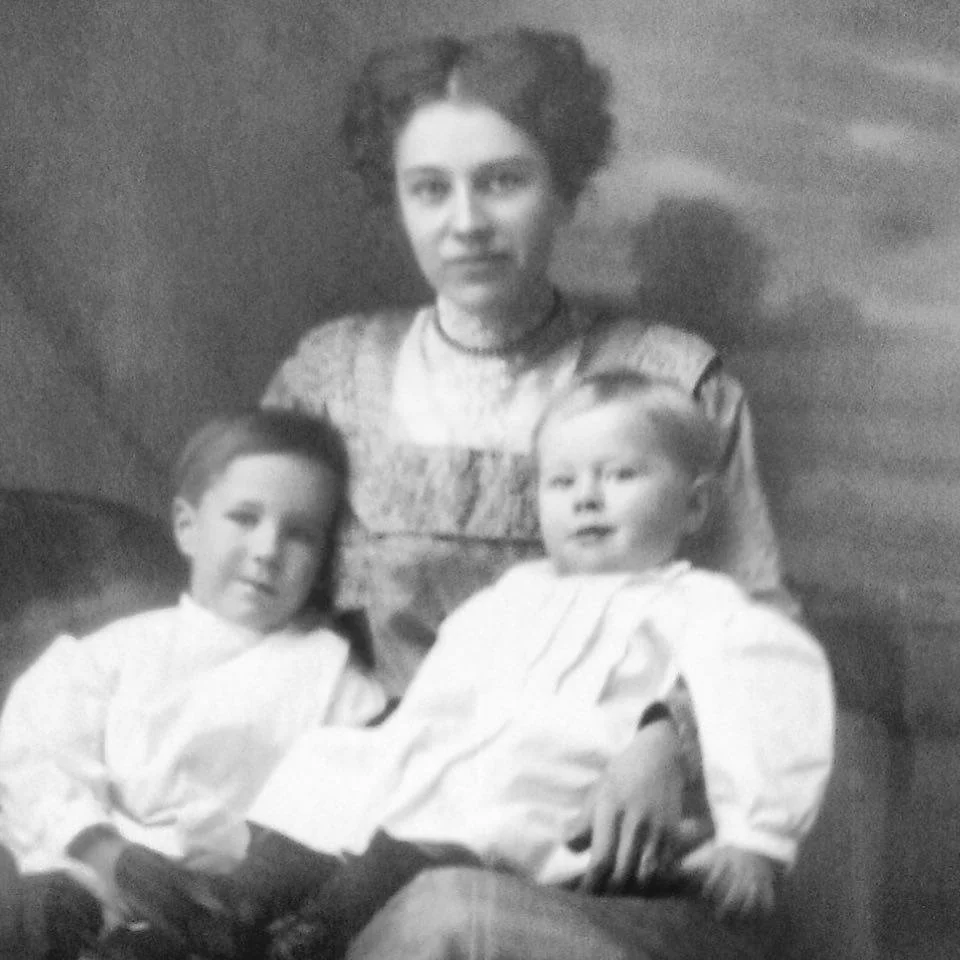
Poking through the attic few years ago, my grandmother found a brown, faded photograph of Inga and set it on the mantelpiece above the fireplace. Inga is young, with brown hair and wears a familiar, high-necked dress with frills running down the front. In her arms she holds her two eldest children: Frank and his brother Robert. My great-grandmother, Dorothy, had yet to be born, although my mother guesses this picture may have been taken during the early stages of Inga’s third and final pregnancy.
Inga is pretty in a plain sort of way. While I find most old photographs from the turn of the 20th century creepy and unreal due to the expressionless faces of the subjects, Inga and her sons seem relaxed and happy. Little Bob, the blond baby, sits on Inga’s knee wearing an outgoing smile, as older brother Frank presses himself shyly against their mother’s breast.
Frank was deaf, likely a result of a tumble Inga took down our steep attic steps while she was pregnant with him. He lived with his mother in the house until the day she died, a fact that makes his demeanor in this picture all the more touching.
I imagine Inga sitting in what was to become my room, on what was to become my bed, cradling my young great-grand mother, swaying her back and forth in her arms:
“Everyone loves you, everyone loves you, you’re safe and warm.”
***
Things continued like this for years. The front guest room in particular was a hotbed of activity. A friend of my dad’s who stayed there a few months casually mentioned waking every few days to find a dark figure sitting at the end of the bed, staring at him. I hated that room. Even though it was soaked with sun during the day, it was always cold, imposing. I didn’t go in there alone if I could help it.
By the time I was in junior high, I spent a lot of time at home alone, because my parents both worked until dinnertime. After school I'd sit in my room eating ramen noodles, doing homework, writing code for my Xanga site or composing page after page of sappy love poems about Zak Prauer, the love of my 7th grade life who at that point had yet to send so much as a glance my way.
“Oh Zak you are a hottie/And if the truth be told/I think you are much hotter/Than Eminem/Who looks like mold,” I wrote one sunny afternoon, when suddenly my poetry was interrupted by music from the front guest room.
It was old: Bing Crosby or Frank Sinatra, I couldn’t tell which through the static. I assumed a clock radio had gone off, but when I walked into the room to turn it off, I was hit by a wave of cold and nausea. Every hair on my body sprung up when I looked at the clock radio. It was set to 101.3, a top 40 station, and the alarm was off. I turned off the radio and all but ran back into my room, but when I got there, the music was back on.
Panicking, I ran into the guest room, unplugged the radio, and dove back into bed, slamming the door behind me. I turned on the radio in my room to check whether 101.3 was actually playing music from the 1930s. Simple Plan’s “Perfect” came blaring out of my speakers and I shut it off immediately, sick to my stomach. The moment my music stopped, I heard it again: full of static, jangling, crooning; this time it was quiet, taunting me, daring me to come back and turn off the radio that had no earthly way of being on.
I tore out of the house into the late afternoon sunshine, and wandered the neighborhood until my mom got home. I told her what happened, but of course, when we went to check the guest room, there was nothing but a silent, unplugged clock radio waiting to greet us.
***
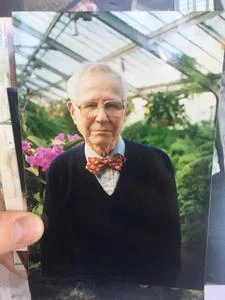
When the house was first built, the front two rooms were connected, and served as a nursery for the children. When we moved in, Frank’s peculiar brand of hoarding had transformed the once open space into two cramped rooms stuffed with made-for-TV items he ordered late at night and never bothered to open. It’s interesting that the ads worked on him at all; he could barely hear the enthusiastic pitches made by the pseudo-celebrities selling the products. Still, he kept the volume on the TV all the way up, and it wasn’t unusual for him to have multiple radios blasting at all hours throughout the dusty piles of unopened packages that littered every dark corner of the house.
Frank didn’t die at home, though I’m sure he would have preferred to. About a year before we moved in, my dad was awoken by a call at 1:30 AM from the old man’s nursing home. Frank passed away in his sleep, they said. My mom visited him earlier that day, and found him agitated, depressed. “What’s going to happen to my shop when I die?” He’d asked her, frantic at the thought of his years of inventions going to waste. “What’s going to happen to all my things?”
My dad groggily took in the news of Frank’s death, and fell back to sleep. Soon after, he had a dream. Frank walked into my parent’s bedroom and stood at the end of their bed. “I just wanted to say goodbye,” he said. His voice, his eyes, his attention: all were “clear,” the only word my father could find to describe his demeanor. He seemed free from the cloud of misunderstanding and confusion that plagued him in life. With a twinkle in his eye, he nodded at my dad, and walked out of the room without a trace of an old man’s hobble.
This graceful goodbye suggests he moved on, but after his death, Frank’s things sat in the house, untouched for months before we began to clear them out. He was so worried about what would become of them, and for good reason. So much of it was trash in our eyes, we threw it away without a second glance. So many of his haphazard collections ended up rotting in landfills, doomed to stay unopened and unappreciated for the rest of their time on earth. Still, many of his inventions and late night purchases lurk throughout the house even today, and I imagine they’re biding their time, waiting to be collected by an owner who will never be back.
Maybe the spirit in the front rooms isn’t Frank at all, but the soul of his belongings, angry at their abandonment, looking for attention, seeking revenge after years of neglect.
***
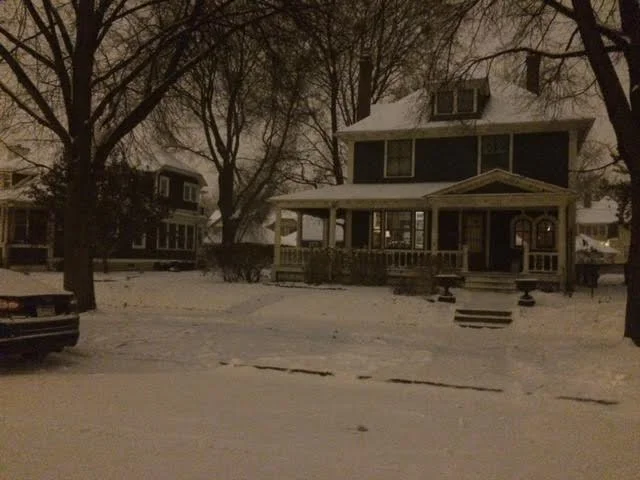
My parents were often out of town when I was in high school, which made my house a prime party location. Mix teenagers, alcohol and a haunted house, and spooky things are bound to happen. Ellen passed out on the couch in the living room, and woke up to see a figure of a woman, rocking back and forth, in the southeast corner of the dining room. Laura once slept in the guest room, and complained the next morning that my boyfriend, who didn’t stay over, had spent all night sitting menacingly at the end of her bed.
These experiences vindicated my own. For years, no one listened when I talked about the ghosts. My parents told me I was dreaming, that I was too imaginative, that I needed to stop reading so many horror stories. But when my friends saw the same things, I knew I wasn't crazy. I could finally relate my childhood experiences to a sympathetic audience, to people actually believed what I was saying.
I liked being known as the girl who lived in the haunted house. At first glance, I was just your basic betch high-schooler in ripped Hollister jeans, but the swirling rumors of the haunting lent me an air of mystery. While most people showed up at my parties to drink without adult supervision, some came for the novelty of partying in a haunted house. So many of those drunken nights ended with a motley crew of classmates sitting in a circle in the living room, talking about ghosts and trying to contact the great beyond.
After one of these parties, my then-boyfriend dreamt of a woman who resembled me, wrapped in blood red cloth. She stood at the end of the bed, and told him the only safe place in the house was my parents’ room. He shook me awake at 3 a.m. and dragged me to their bed, despite having proclaimed earlier that sleeping there would be weird.
There was something comforting about my parents’ room. It was a haven at the back of the house. It was where I’d run as a child on those sleepless nights when the cold hands grabbed my feet. It was where I slept when I was alone, the only room that let me rest in peace, not a footstep in earshot. Even my best friend confessed she slept there while cat-sitting, not because my parents’ old spring mattress was comfortable (it wasn’t), but because it was the only place in the house she felt truly alone.
Imagine my surprise when my grandma told me both Inga and her father-in-law passed away in that room, decades apart. I’d always assumed they expired in the guest room, but it seems death brought calm to that room, and chaos to the rest.
***
Visiting the house today, it’s hard to believe it was ever in such disarray. The old metal siding has been stripped off and replaced with wood, painted a blue the color of the deepest sea. Inside, the kitchen—once dark, damp, dismal and moldy—has been transformed into a bright and sparkling display of new appliances, granite countertops, and a shining hardwood floor. The heavy curtains on the large, front windows in the living and dining rooms are gone and light flows in freely, illuminating the corner where Inga sat and rocked all those years ago.
It’s been a long time since I can remember feeling uneasy in the house, a long time since it looked like a place that must play host to spirits from the Netherworld. The ghosts whose company I counted on as I drifted to sleep no longer seem willing to make their presence known. The two front rooms have lost their aura of eerie agitation. Perhaps the renovations have driven the spirits away, perhaps they can’t haunt a place they no longer recognize as their home.
I've had no contact with anything remotely otherworldly for a long time, but I haven’t stopped trying. I amuse my friends by guessing their future through tarot cards, searching for meaning within the random placement of the cards on the table. They’re usually right about things, which either means magic is real or I’ve become skilled in the art of intuition.
My rational, adult mind wants me to chock up my strange experiences to childhood fantasy, but my memories of these uncanny events flow seamlessly into my memories of life’s more unremarkable moments. They’re so ingrained in my mind that even today it’s impossible for me to deny that something must have happened. These things I believed, these things that I knew in the same way I know how to breathe, are suddenly nothing more than hazily remembered feelings. I never was religious, but I this loss feels akin to the loss of God for the pious.
Every so often I go home for the weekend, and at night I lie awake in the dark. I listen intently for so much as a whisper from the closet, but she never says a word. That sad woman either never existed at all or has grown tired of talking to me. Either way, the silence is deafening.