Online Fame and the legend of Lilly Monroe
By Caroline Thompson
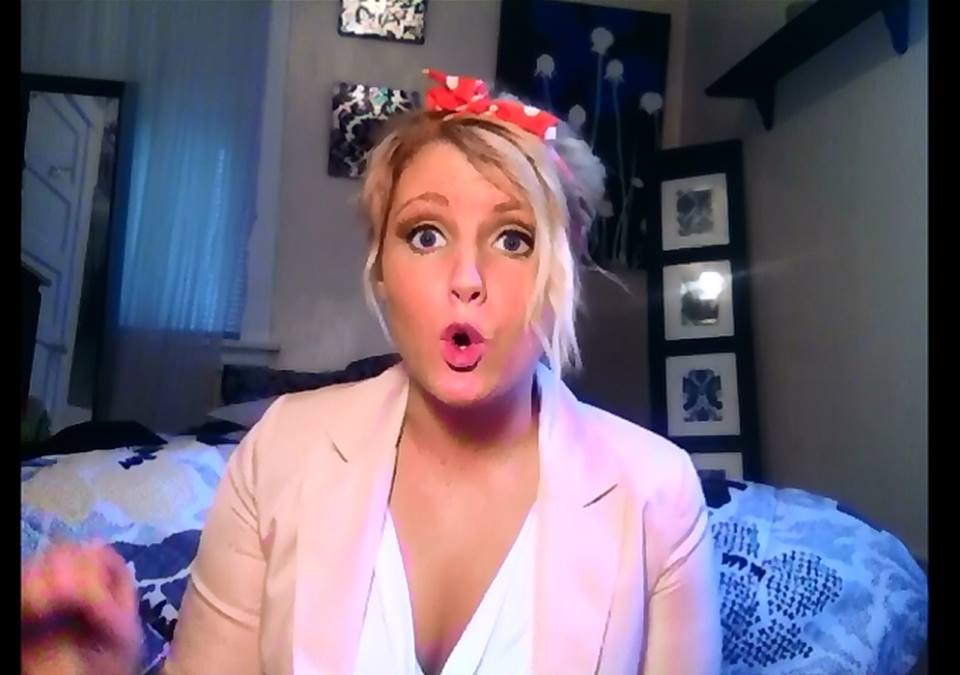
I was 20 the first time I met Lilly Monroe, and in a matter of weeks, I learned everything about her. She was pretty, funny, smart and motivated, but what I found most intriguing was the way she’d say whatever she wanted without fear of what anyone else would think. She wasn’t afraid of much, or at least that’s how it seemed at the time. In contrast, I was lost, depressed, scared of everything. Stuck thousands of miles away from home in the snowy cold of a Vermont winter at a college I hated, I admired her courage from afar.
Roughly a year later I was home in Minneapolis and happy again. And that’s when I finally met her in person.
See, the Lilly I got to know the year before, the girl who seemed so brave and strong and together, had a blog that I somehow stumbled on during the many hours I spent online in in Vermont. As I shut myself off from the world, I devoured every page of her life, or at least the parts she was willing to share with the world. When I moved home that spring, I found out she was close friends with a girl my best friend was living with—a random connection that left me feeling a bit strange: how did I interact with this person I knew so much about, when she had no idea how close we really were? I decided to deal with it the way I deal with many of life’s awkward moments, and played dumb. Luckily, real life Lilly was as charismatic as her writing suggested, and I quickly came to like and admire her as a flesh-and-blood human being.
Now 24, Monroe is running into this problem more and more.
“It’s a little strange,” she says, when asked how it feels to be recognized in person by online followers. “They know so much about me that, realistically, they probably shouldn’t know, especially since I wasn’t even aware of their existence.”
But this is a hazard of her craft. Monroe has been carefully constructing her social media presence for years now, and recently opened an online clothing business, Lion Head Co., made possible in part by the support of her legions of Twitter followers: 22,400 in all.
In addition to Lion Head, she also makes money off her YouTube videos. Although her posts are infrequent at best, she estimates she’s made about $500 over the past few years doing the thing she does best: telling it like it is. Her videos, like her blog, her Twitter and her Instagram page, mainly consist of advice on sex, love and relationships, but she delves into deeper topics like racism, global politics, and, of course, the impending zombie apocalypse. Although she’s not Jenna Marbles, not yet at least, her well-timed delivery and sarcastic attitude make her videos hilarious to watch, and her no-nonsense approach to stating her thoughts and feelings is unabashed and, at its heart, truly real. She has about 2,000 followers on YouTube, and her most watched video, provocatively titled “Why Black Girls HATE White Girls” has more than 130,000 views on the site.
She gets a lot of encouragement online, but there are always haters. Many people don’t take kindly to a blonde white girl who doesn’t fit into the “Minnesota Nice” stereotype easily applied to so many girls who look like her. She talks candidly about her romantic experiences, many of which involve premarital sex and interracial dating, the latter being the subject of her most popular video, and the source of many deeply racist and sexist jabs thrown her way in the comments section.
“They are the most ridiculous things I’ve ever read,” she says of the hate she gets on YouTube. “It makes me a little sad for humanity.”
She takes it in stride, though. Occasionally she’ll make a response video calling out the most absurd comments, defusing and deconstructing them with humor and a few casual eye-rolls. But usually she just ignores it. Any attention is good attention, and when you’re trying to sell your personality, it’s inevitable that some people aren’t going to like what they see.
“I just don’t take personal attacks seriously in the slightest,” she says. “You can’t, because if you do then you’re letting others control your happiness, and that’s never the way to go.”
As to where she wants all this online fame to take her, she’s got big plans.
“There is a method to my madness,” she laughs. “I want to write a book, or a series, actually. The bigger my online presence, the more my book will sell, so I’m trying to build a base for that.”
But for right now, she’s happy if she can reach people on a personal level, even people she doesn’t know:
“At the end of the day, I hope my words can help better someone’s current life situation, whether through fitness, relationship, friendship, career advice or learning to love yourself, I don’t care. But once I move to my private island when I’m 57, no, I do not plan to have an online profile anymore.”